Fit Arabic
Illustrations & animation - Naime Pakniyat
Comissioned by - David Jonathan Ross
Fit Arabic
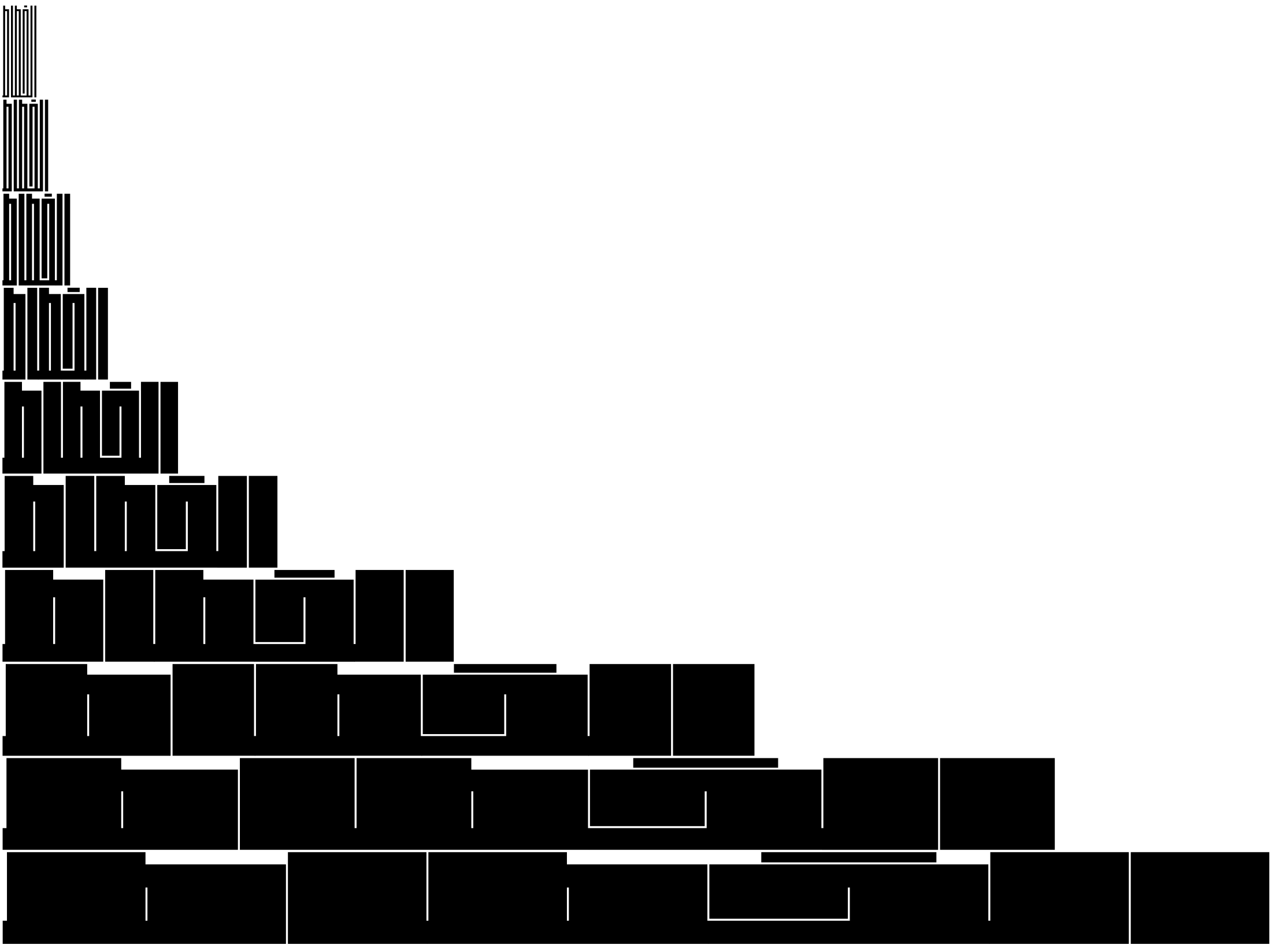
A hyper-stylized typeface designed with one thing in mind: filling up space with maximum impact
Fit Arabic is one of those dream projects where the stars align; a great concept to start, an amazing human being to collaborate with, and a deceptively simple design that requires creative solution-finding. The idea behind the Fit type family is simple in theory but devilishly clever in practice: the letterforms are designed to fill space for maximum impact. Thanks to an expansive range of widths, you, the user, can take just about any text and—cue dramatic music—‘fit’ it into whatever space life (or your art director) throws at you.
This brilliant blueprint for the Fit font family is the brainchild of our good friend and an undisputed champion in the world of type™, David Jonathan Ross. To quote DJR himself: ‘Fit is anchored by its white shapes: regardless of width, the space within the letters and the space between the letters always remains the same.’
Since its debut in 2017, Fit has gone global—adding Hebrew with Oded Ezer, Armenian with Gor Jihanian, Devanagari with Kimya Gandhi, and Tamil with Aadarsh Rajan, with more scripts patiently waiting in the wings. The Arabic version is the latest addition in this multiscript expansion, and like its predecessors, it had the daunting task of translating the original design concept into an entirely new script without losing any of its original spark. Fit Arabic draws heavily from the Kufi style of Arabic calligraphy, a script used in early Islamic times for monumental inscriptions and Qur’ānic manuscripts. This style of Arabic has a multitude of variations that range from the heavily rigid geometry of Square Kufi to the ornate Floral Kufi. For Fit Arabic, I leaned mostly on Square Kufi, which is characterized by its sharp, rectilinear forms and horizontal orientation. You can see this influence in shapes like the final form of Alef Maksura (and its Persian and Arabic variants), where the letter folds back on itself like a contortionist determined to fill every inch of available space.
But Fit Arabic isn't a museum piece; It’s not purely Kufic, and that’s the point. Wherever possible, I nudged the design toward legibility, because in a design where it isn’t the *easiest* to pick out letters, you want to give anyone trying to actually read the font a fighting chance. That meant sneaking in a few curves and diagonals wherever the world of Fit would allow. The result? A typeface that borrows from history while doing something entirely fresh: a display font built for instant graphic impact, ready to fill any space without ever feeling forced.
Type testers
Opentype Features
* Certain features are meant to be on by default according to the OpenType Specification. On Safari, sometimes it isn’t possible to turn off a feature that is on by default.
Character Grid
Language Support
This family supports
21
languages.
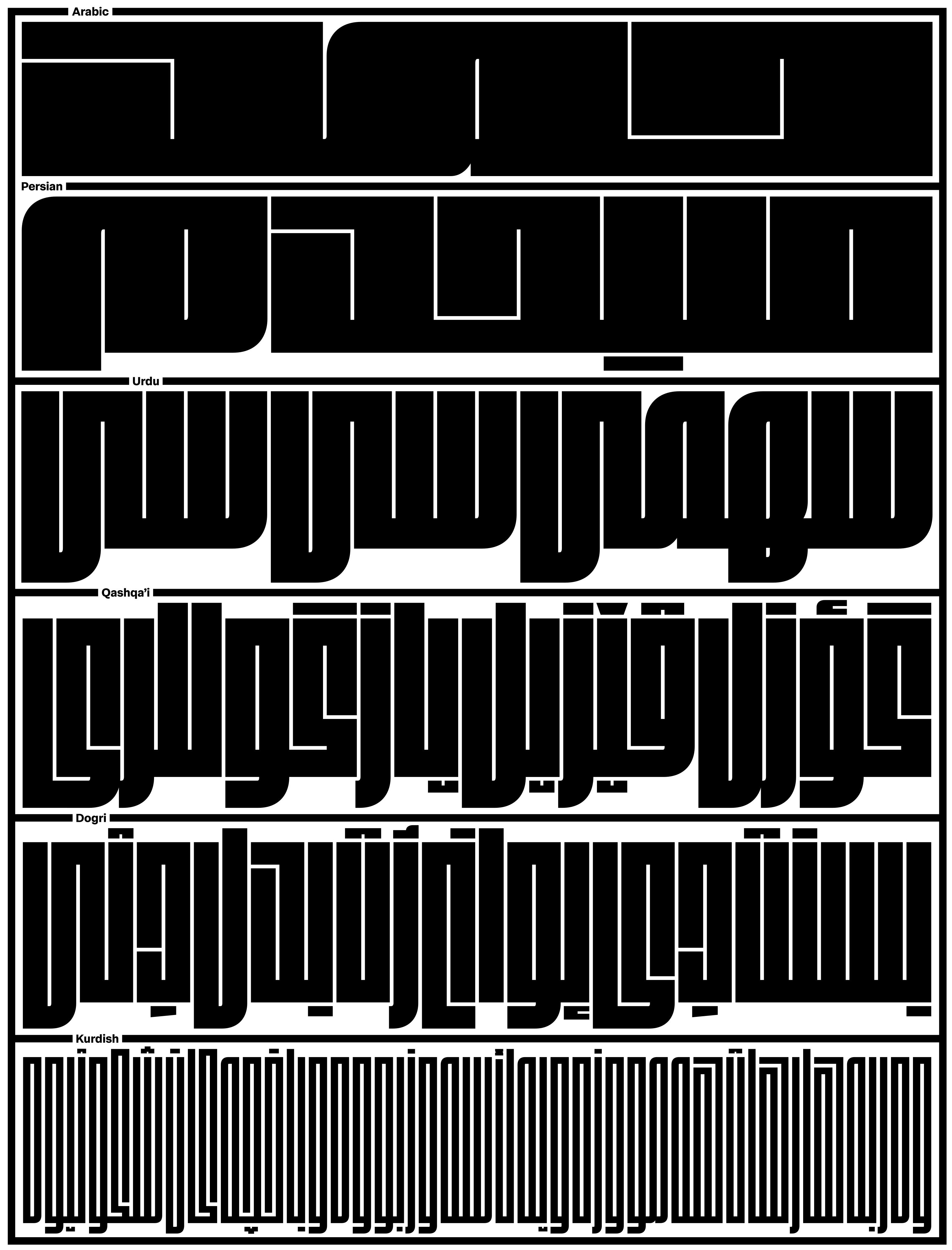
abv Baharna Arabic acm Iraqi Arabic acq Ta’izzi-Adeni Arabic aeb Tunisian Arabic aec Saidi Arabic afb Gulf Arabic ar Standard Arabic arq Algerian Arabic ary Moroccan Arabic arz Egyptian Arabic ayl Libyan Arabic ayn Sanaani Arabic ayp North Mesopotamian Arabic ckb Central Kurdish doi Dogri (individual language) fa Iranian Persian fa-AF Dari qxq Qashqa'i sdh Southern Kurdish tly Talysh ur Urdu